Data center construction is accelerating in Finland at an unprecedented pace. Discussions often focus on grid connections, energy consumption, and cooling solutions, yet one important aspect is frequently overlooked, the stormwater management.
Data centers are large-scale developments where the amount of impervious surface, and consequently the volume of stormwater generated, is typically substantial. At the same time, their construction often involves extensive earthworks and large construction sites. For this reason, stormwater management is a critical part of environmental impact management, permitting processes, and environmentally responsible project delivery.
Data centers construction water management plans should be updated throughout the various phases of the project.
The greatest risks arise during construction
When discussing stormwater at data centers, attention is often directed toward the completed facility. In practice, however, the most critical phase is construction.
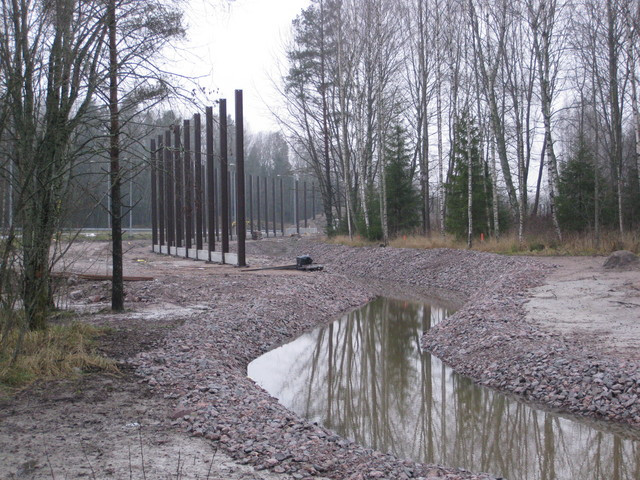
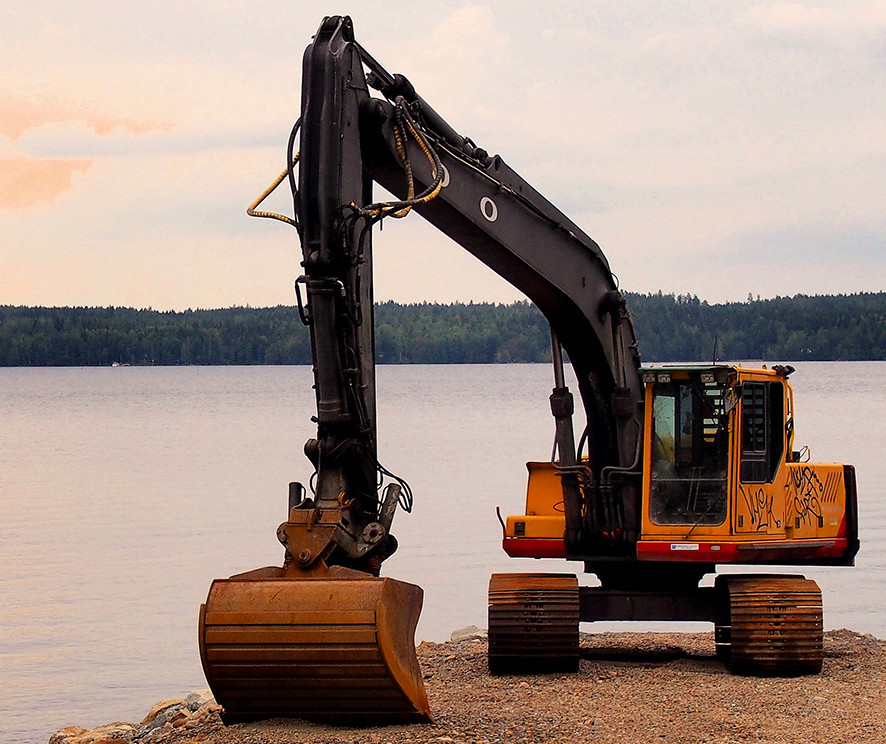
During construction, extensive excavation, filling, and foundation works are carried out, involving significant movement of soil and earth materials. As a result, considerable amounts of suspended solids can be washed away by stormwater runoff, reducing water quality and potentially causing impacts in downstream ditches and water bodies. The larger the construction site, the more important it becomes to plan stormwater management for the construction phase in a staged and systematic manner. In addition to water quality management measures, large construction sites also require effective flow control solutions.
As construction progresses, stormwater management requirements continue to evolve. As buildings, access roads, and other paved surfaces are completed, the amount of impervious surface increases, resulting in larger stormwater flows that need to be managed. At the same time, drainage pathways may change as the site develops. For this reason, construction water management plans should be updated throughout the various phases of the project.
For operational data centers, stormwater volume is the main challenge
Once a data center becomes operational, the focus of stormwater management changes.
Compared with industrial facilities or logistics terminals, daily traffic at a data center is often limited. Most movements are related to staff and passenger vehicles, while continuous heavy goods traffic is relatively low. As a result, operational impacts on stormwater quality are often fairly modest.
The main challenge instead stems from extensive impervious surfaces and efficient site drainage systems. During heavy rainfall events, runoff volumes can increase rapidly, highlighting the importance of detention and retention solutions. Stormwater design must consider not only the individual site but also the surrounding area and the receiving stormwater network or water body.
Data center developments must also address risks associated with backup power systems as well as the management of potential firefighting wastewater. These issues are essential from a project safety perspective and can influence stormwater management solutions through various containment and shut-off arrangements.
One solution does not fit every location
Data centers are planned in a wide variety of environments. Some are integrated into existing urban areas, while others are located in regions where surrounding natural environments and water bodies play a significant role in shaping project requirements.
In urban environments, the challenge may be limited stormwater network capacity. In less developed areas, impacts on catchments, natural ecosystems, and water bodies become more prominent. For this reason, stormwater management cannot rely on standardized solutions; measures must be tailored to local conditions.
The successful delivery of data center projects increasingly relies on integrating expertise from multiple disciplines.
International projects require a shared understanding
Data center projects are often delivered by international design teams. This means that different national practices, design criteria, and ways of working come together around the same project table.
In Finland, stormwater management is guided by municipal requirements as well as national regulations, which in some cases differ from international practices. This underscores the importance of design coordination and the need to establish a shared understanding of project objectives, design criteria, and project phases from the very beginning.
Stormwater management is part of the bigger data center picture
The successful delivery of data center projects increasingly relies on integrating expertise from multiple disciplines. Stormwater management solutions often influence other areas of design as well, including earthworks and ground engineering, environmental assessments, and permitting processes.
The most effective solutions are achieved when stormwater management is considered an integral part of the project lifecycle rather than a standalone discipline. The earlier risks and requirements are identified, the more smoothly a data center project can progress.